

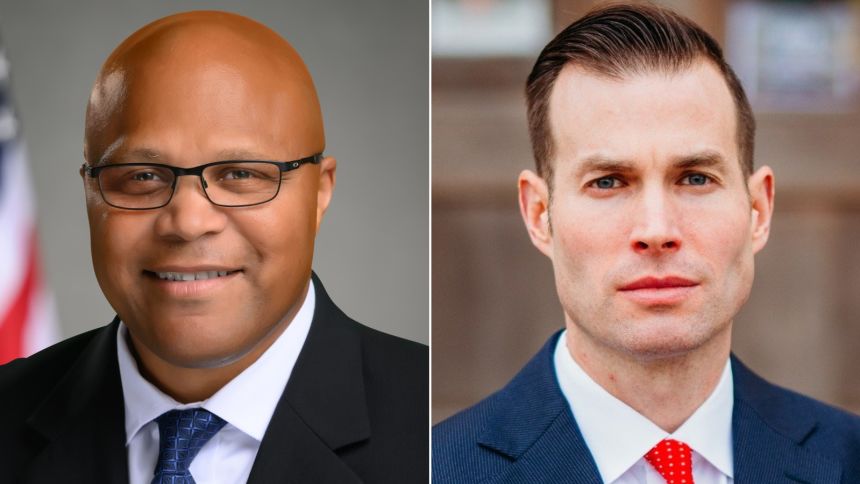
The special election to replace former Representative Marjorie Taylor Greene has reached a decisive moment, as two candidates have emerged from a crowded field of seventeen contenders. After weeks of campaigning and voting across the district, the race has now narrowed to just two candidates who will face each other in a runoff election.
Throughout the district, voters carried out their civic duty by casting ballots for the candidate they believed best represented their views. With no single candidate securing a majority of the vote, the election will move to a runoff, another special election that will allow voters to choose between the final two candidates rather than the original slate of seventeen.
The two remaining candidates are Clay Fuller, a former district attorney running as a Republican, and Shawn Harris, a Democratic candidate whose campaign has gained unexpected momentum. Fuller’s candidacy was widely anticipated, as the district has long been a stronghold for Republicans under Greene’s tenure. Harris, however, has stirred significant interest, particularly among younger voters. Recent polling and turnout trends suggest that young voters are becoming increasingly engaged in the political process, helping bring Harris into the spotlight.
The runoff election will be held on April 7 and will determine who will represent the district in Congress. But why is this race so important?
Currently, the balance of power in the House of Representatives is extremely narrow, with Republicans holding 218 seats to Democrats’ 214. In addition, several seats remain vacant. If Democrats were to win enough of these open seats, the balance could shift to an even tie. Such a scenario would almost certainly intensify political tensions within the House and could potentially place control of the chamber within reach for Democrats.
This situation ties into the broader concept known as divided government—when the president’s political party does not control one or both chambers of Congress. Divided government often leads to frequent political conflict and legislative gridlock, as opposing parties struggle to advance their agendas. As a result, major legislation tends to stall, and the only progress that occurs often comes through rare bipartisan agreements.
For voters in this district, the April 7 runoff will not only determine their next representative, but may also play a small yet meaningful role in shaping the broader balance of power in Washington.