

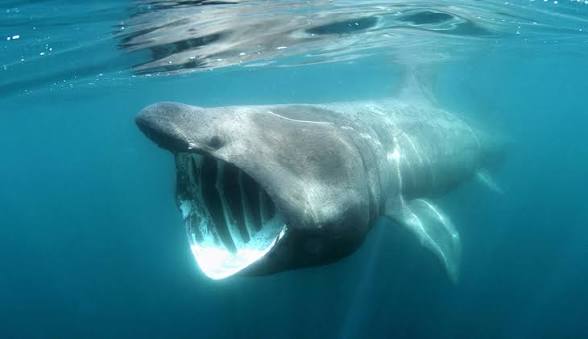
You are statistically more likely to get killed by a falling coconut than by a shark with coconuts kill 30 times more people annually than sharks do. Despite what a lot of people think sharks are not dangerous and do not harm humans most of the time. Most of the time when they do attack humans it is because people pull their tails, people try to ride them, or they feel threatened although every now and then a sharks will attack a human without being provoked because they mistake humans as their prey. Some shark species look scary for example the basking shark they look scary with their big mouths, but they only eat plankton. If you are in the ocean and a shark approaches you it is most likely curious, or if you have a Shiny, metallic, or sequined bathing suit on it can increase the risk of shark interactions, as they reflect sunlight and mimic the scales of fish, which can attract sharks looking for prey.
There are over 500 species of sharks that is known, and around 165 species of sharks are endangered. Each year an estimated of 100 million sharks are killed globally. Around 73 million sharks are killed for shark fin trade. Shark fin trading is where the shark’s fins are cut off often when they are still alive then they are thrown back into the ocean leading to death by suffocation, or blood loss. The fins are sold for hundreds of dollars per pound, they are primarily used in a dish called “shark fin soup.”
Sharks can lose more than 30,000 teeth in a lifetime. Depending on the species of shark they can give birth three different ways. The first one is oviparous sharks lay eggs protected by an egg case, called a mermaid purse. About 40% of sharks are oviparous. The second one is viviparous sharks carry their embryos to term and give birth to live pups. This is often seen in large shark species such as hammerheads and blue sharks. The last way is ovoviviparous sharks produce eggs, but instead of of those eggs hatching out of the body, they hatch inside of the mom, then the mom shark gives life birth. Around 65% of sharks are ovoviviparous sharks.