

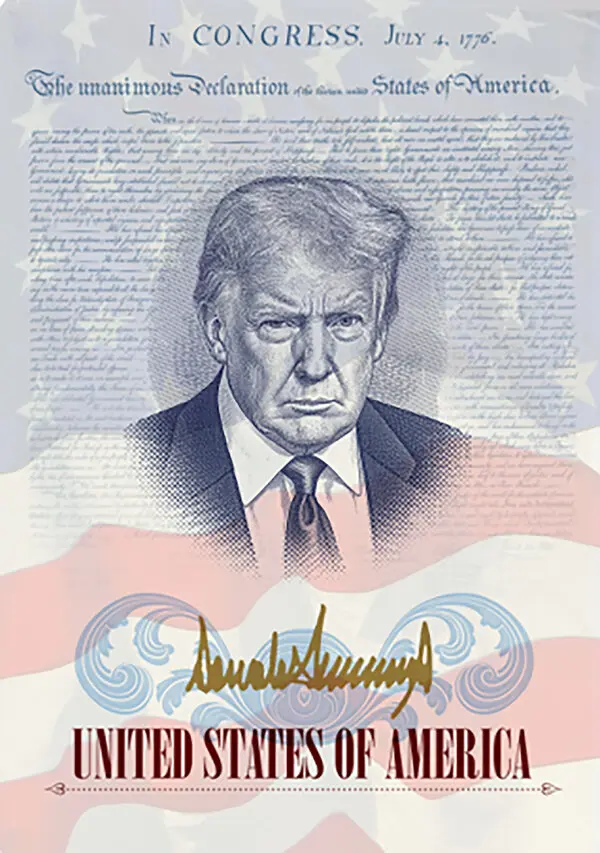
Washington, D.C. — The United States Department of State has announced plans for a limited-edition U.S. passport featuring the likeness of Donald Trump printed inside its pages. The initiative is part of a broader set of commemorations tied to the upcoming 250th anniversary of American independence, an event expected to include sweeping national celebrations and symbolic updates across federal institutions.
Officials say the commemorative passport is intended to mark the historic milestone and reflect a period of renewed national identity. The proposal follows other anniversary-related efforts, including discussions of redesigned currency, restoration and cleaning of national monuments, and expanded public programming at federal sites. Organizers have framed these efforts as a way to unify Americans and highlight the country’s legacy as it approaches its semiquincentennial.
However, the announcement has quickly sparked controversy across political and public spheres. Critics argue that incorporating a sitting or recent president’s likeness into official government documents crosses a line between patriotism and personal branding. Some have pointed to previous changes involving Trump’s image or influence, including reported updates to the National Parks annual pass and programming shifts at institutions like the John F. Kennedy Center for the Performing Arts, as part of a broader pattern.
Supporters of the move, on the other hand, contend that presidents have historically shaped national symbolism and messaging, particularly during major anniversaries. They argue that the passport design is simply another expression of leadership during a significant historical moment. Still, historians note that U.S. passports have traditionally emphasized national symbols such as landmarks, historical figures from earlier eras, and iconic imagery rather than contemporary political leaders.
Beyond the symbolism, practical concerns have also been raised. Travel experts question whether introducing multiple passport designs could create confusion at international checkpoints or complicate verification processes. While officials have stated that the limited-edition version will meet all global security standards, some worry about how foreign governments and border agents may perceive the change.
The debate has also extended into broader discussions about how the United States should commemorate its 250th anniversary. Many civic groups and historians advocate for celebrations that emphasize shared history, democratic values, and collective achievements rather than individual political figures. They argue that such a milestone offers a rare opportunity to reflect on the nation’s past while setting a unifying tone for its future.
As planning continues, the State Department has indicated that public feedback will play a role in shaping final designs and rollout decisions. Whether the Trump-themed passport becomes a lasting symbol of the anniversary or a short-lived controversy remains to be seen, but it has already ignited a national conversation about tradition, leadership, and the meaning of patriotism in modern America.